Signed in as:
filler@godaddy.com

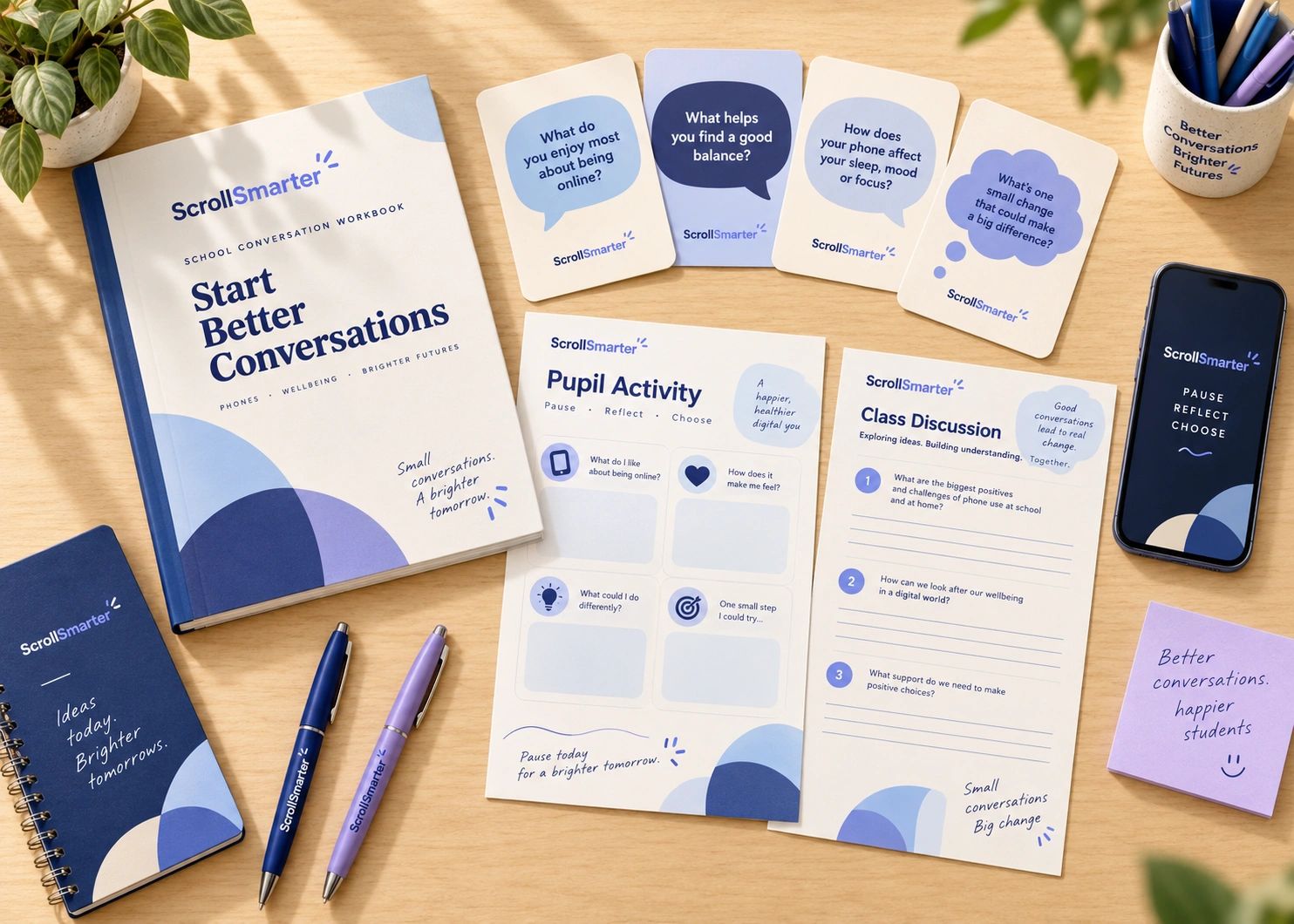
Schools are already navigating complex conversations about smartphones, social media and young people’s digital lives.
ScrollSmarter is designed to complement - not replace a school’s existing PSHE or RSHE, safeguarding and online-safety provision.
Beginning with Years 6 and 7, ScrollSmarter provides flexible, age-appropriate, staff-led resources that teachers and pastoral teams can use to explore phone habits, online pressures and healthier digital choices through discussion, reflection and pupil voice.
The materials are designed to be practical, adaptable and easy to introduce—whether used for a short tutor-time conversation, an RSHE lesson, an assembly or as part of a wider digital wellbeing programme.
Clear activities and prompts that reduce preparation time for teachers.
Use one short conversation or combine the resources into a broader programme.
Pilot schools can help develop materials that reflect pupils’ real experiences.
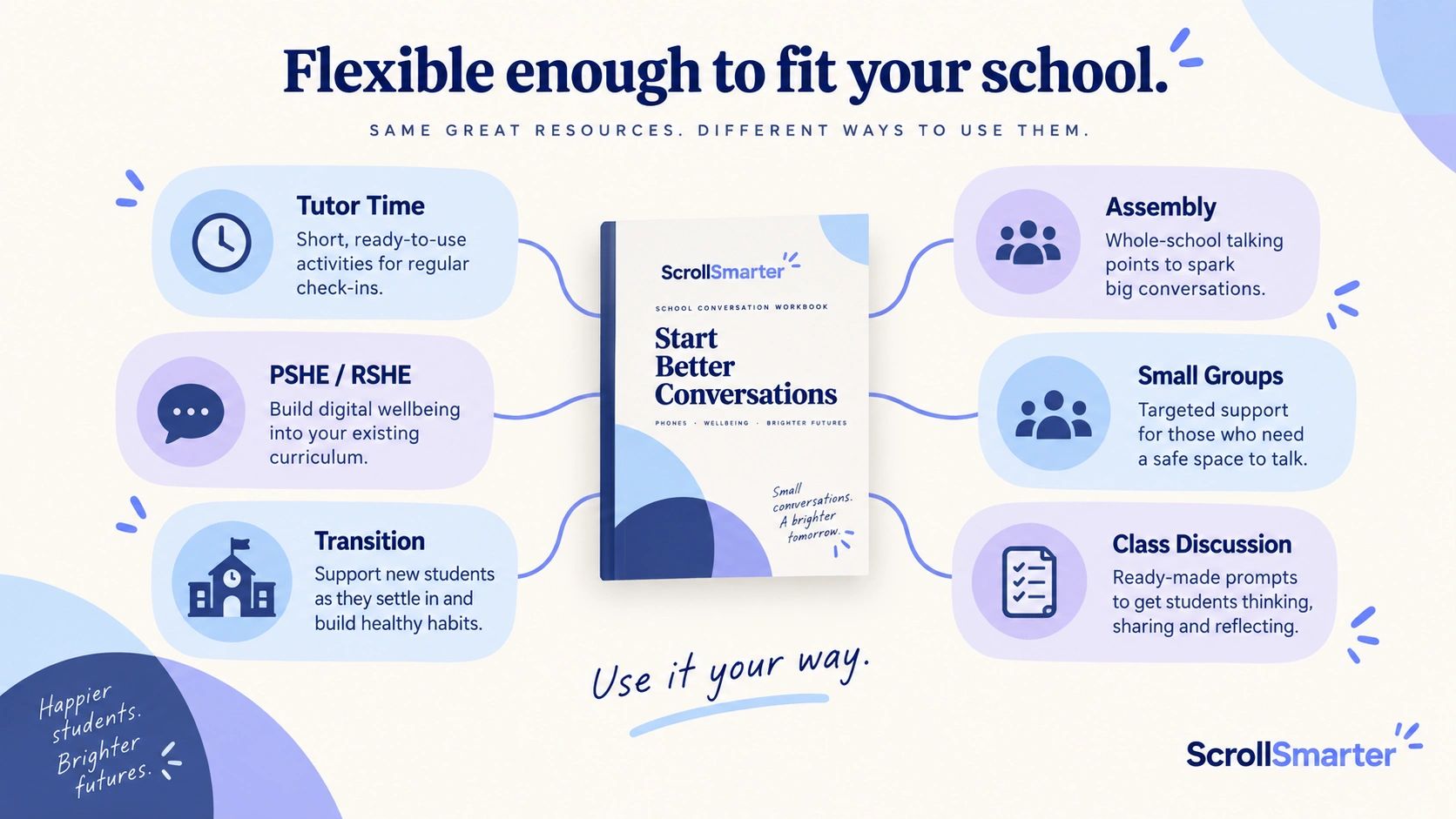
ScrollSmarter doesn’t need to become another demanding programme in an already busy timetable.
Schools can begin with a simple 10–15 minute conversation, use an individual activity during tutor time or RSHE, or combine the resources into a broader digital wellbeing programme.
Each resource is designed to help pupils talk, reflect and contribute; giving teachers a practical starting point while allowing every school to adapt the conversation to its own pupils and priorities.
One conversation can be a useful place to start.
A simple ScrollSmarter conversation has three stages:
Begin with a relatable question about phones, scrolling or online life.
Give pupils space to share experiences, pressures and different points of view.
Encourage one small insight or more intentional choice—not perfect behaviour.
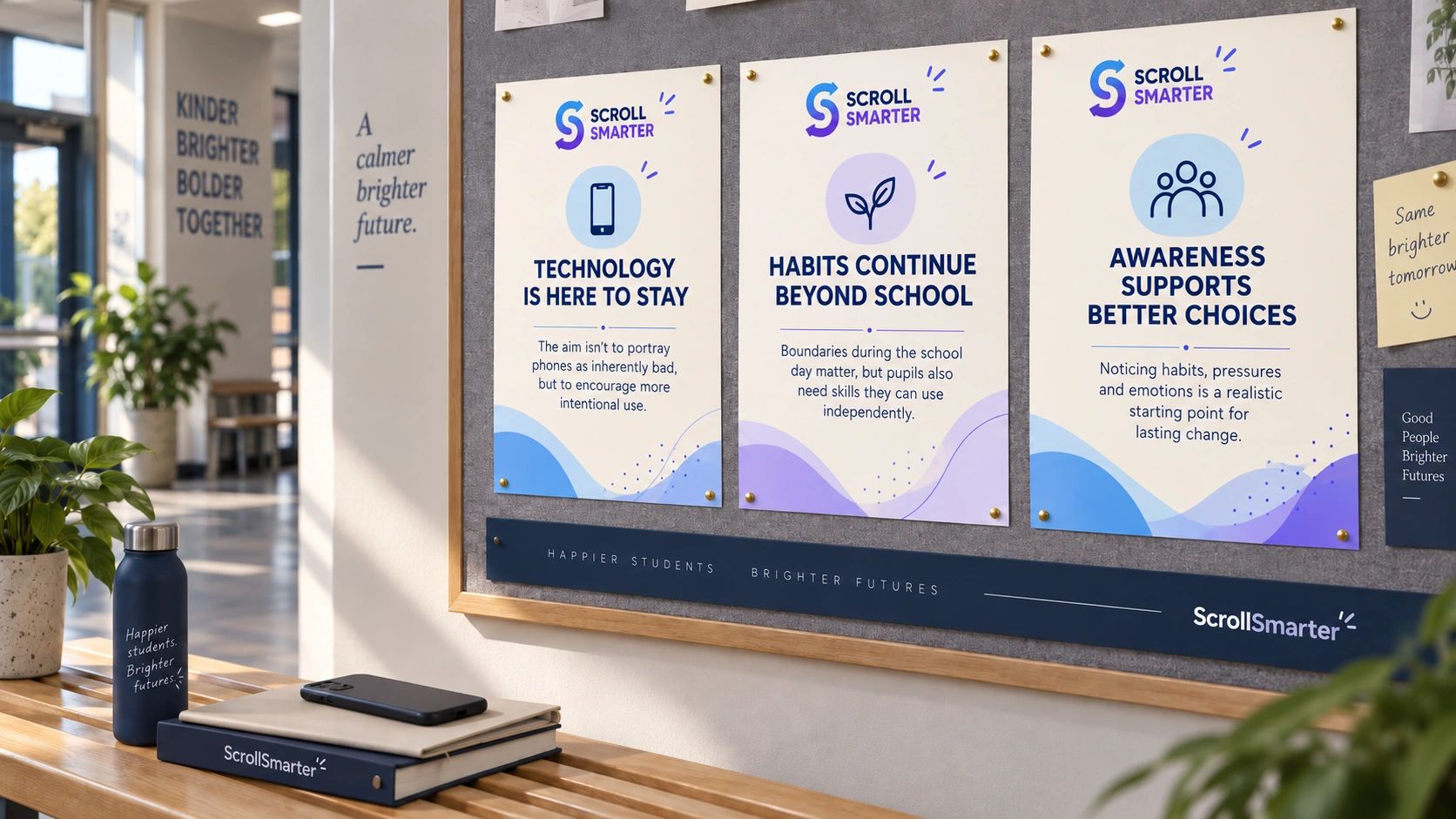
The national conversation around phones and social media is growing, but pupils still need practical support to understand their own habits and choices.
The aim isn’t to portray phones as inherently bad, but to encourage more intentional use.
Boundaries during the school day matter, but pupils also need skills they can use independently.
Noticing habits, pressures and emotions is a realistic starting point for lasting change.

The first ScrollSmarter pilot pack has been created for schools to use as a light-touch Year 6–7 digital wellbeing resource.
It includes teacher guidance, discussion prompts, short classroom activities, pupil reflection sheets, posters and simple feedback forms.
Schools can use the full pack or select individual resources to support PSHE / RSHE, tutor time, transition sessions, assemblies or wider classroom conversations.
Teacher guidance and session notes
Discussion prompts and short activities.
Reflection sheets, posters and feedback materials.